






When choosing earplugs for sleep, you may find one pair rated 19 dB NRR and another rated 26 dB SNR. At first glance, the larger number might seem like the obvious choice. But NRR and SNR are different rating systems, so their values cannot be compared directly.
Both ratings describe how much sound a hearing protector can reduce under standardized laboratory conditions. They offer a useful starting point, but they cannot predict exactly how quiet your bedroom will become. Real-world noise reduction also depends on the fit, seal, ear tip size, sleeping position, and type of sound you want to soften.
Here is what the numbers can tell you, what they leave out, and what to consider when choosing noise reduction earplugs for sleep.
NRR vs SNR earplugs at a glance
| NRR | SNR | |
|---|---|---|
| Full name | Noise Reduction Rating | Single Number Rating |
| Commonly used in | United States | Europe and other international markets |
| Expressed in | Decibels (dB) | Decibels (dB) |
| What it describes | Tested attenuation under the NRR system | Tested attenuation under the SNR system |
| Directly comparable? | No | No |
| Best way to use it | Compare NRR-rated products | Compare SNR-rated products |
NRR and SNR describe similar information, but they use different testing and calculation methods. The same pair of earplugs can therefore display one NRR value and another SNR value.
The measurement changed. The earplugs did not.
Why do earplugs have noise reduction ratings?
An earplug noise reduction rating provides a standardized way to describe attenuation, or the reduction in sound reaching the ear.
Without these ratings, shoppers would have to rely on vague descriptions such as “powerful,” “maximum,” or “seriously quiet.” NRR and SNR provide more objective reference points, making it easier to compare earplugs evaluated under the same system.
However, these ratings come from controlled tests. Your bedroom, hotel room, or airplane seat introduces variables that a laboratory cannot predict, including the shape of your ears, the way you insert the earplugs, and whether they remain in place while you sleep.
Ratings are useful. They are simply not the whole story.
What does NRR mean on earplugs?
NRR stands for Noise Reduction Rating. It is the rating system commonly used in the United States for hearing protection devices such as earplugs and earmuffs.
A higher NRR generally indicates greater tested attenuation under the NRR system. For example, an earplug with an NRR of 19 has a higher laboratory rating than one with an NRR of 10.
That does not mean every sound will become precisely 19 dB quieter. It also does not guarantee that every person will experience the same reduction. NRR reflects performance under specific test conditions, not a personalized forecast for your sleeping environment.
The most useful way to read the number is comparatively. When choosing between products labeled with NRR values, the rating helps you understand their relative tested noise reduction.
What does SNR mean on earplugs?
SNR stands for Single Number Rating. It is widely used in Europe and other international markets to summarize the attenuation provided by hearing protection.
To calculate an SNR value, earplugs are tested across a range of sound frequencies. The results are then combined into one overall rating. As with NRR, a higher SNR generally indicates greater tested attenuation under that particular system.
Still, the final number is a summary. It cannot show how effectively the earplugs reduce every individual frequency or noise source.
That distinction matters for sleep because nighttime sound is rarely uniform. Snoring, traffic, voices, footsteps, and air-conditioning all have different acoustic characteristics. Two sounds that seem equally loud may not be reduced in the same way.
What is the difference between NRR and SNR?
The main difference between NRR and SNR lies in the standards used to test and calculate them.
Both express noise reduction in decibels, but their values are not interchangeable. SNR values are often numerically higher than the NRR values assigned to the same hearing protector. This does not mean that the product provides more noise reduction in Europe or less in the United States.
It means that the result has been expressed through a different system.
For that reason, the fairest way to compare earplugs is to use equivalent ratings:
- Compare NRR with NRR.
- Compare SNR with SNR.
- Avoid judging one product’s NRR against another product’s SNR.
A higher number only means more when the numbers speak the same language.
Can you convert NRR to SNR?
There is no universal formula that can accurately convert every NRR value into an SNR value.
Approximate conversions are available online, but they cannot account for all the differences in test procedures, evaluation methods, and calculations behind the two systems. Applying a general formula may produce a precise-looking number without producing a reliable comparison.
When both ratings are available, treat them as separate descriptions of the same earplugs:
| If you are comparing products with… | Use… |
|---|---|
| US ratings | NRR |
| European or international ratings | SNR |
| A mixture of NRR and SNR | Find equivalent ratings before comparing |
There is no need to decide which system is more accurate. Each rating is designed for use within its respective framework.
Does a 20 dB rating make sound 20 dB quieter?
Not necessarily.
It may be tempting to take the estimated volume of a sound and subtract the earplug rating. If someone’s snoring reaches 60 dB and the earplugs are rated at 20 dB, for example, you might expect the sound reaching you to be exactly 40 dB.
Real-world attenuation is more complicated. The result can be affected by:
- The size and shape of your ear canal
- The ear tip you choose
- How deeply and securely the earplug is inserted
- Whether it creates a complete seal
- The frequency of the sound
- Your distance from the noise
- Movement during the night
- The condition of the earplug
- Your personal sensitivity to sound
An NRR or SNR value describes tested attenuation potential. Fit determines how much of that potential you are likely to experience.
Why real-world noise reduction can be lower
Laboratory testing takes place under controlled conditions. Everyday use does not.
An earplug may be capable of significant noise reduction, but only when it fits correctly and seals the ear canal. Even a small gap can let more sound through. Movement, wear, and an unsuitable ear tip can reduce performance further.
Ear tip size
Ear canals vary considerably in size and shape. A tip that is too small may feel comfortable but fail to create a complete seal. It may also loosen as you move.
A tip that is too large can create pressure, feel painful, or prevent the earplug from sitting in its intended position. Your two ears may even need different sizes.
Having several ear tip options makes it easier to balance attenuation, stability, and comfort instead of accepting whichever size arrives attached.
Seal
Earplugs reduce noise by creating a barrier within the ear canal. If that barrier is incomplete, sound can pass through the gap.
A proper seal should produce a noticeable reduction in the surrounding noise. The earplug should feel stable without causing pain or excessive pressure.
Insertion methods vary between foam, silicone, filtered, and molded earplugs, so always follow the instructions for the specific product.
Movement during sleep
An earplug may fit correctly when first inserted but shift when you turn your head, move your jaw, or press your ear against the pillow.
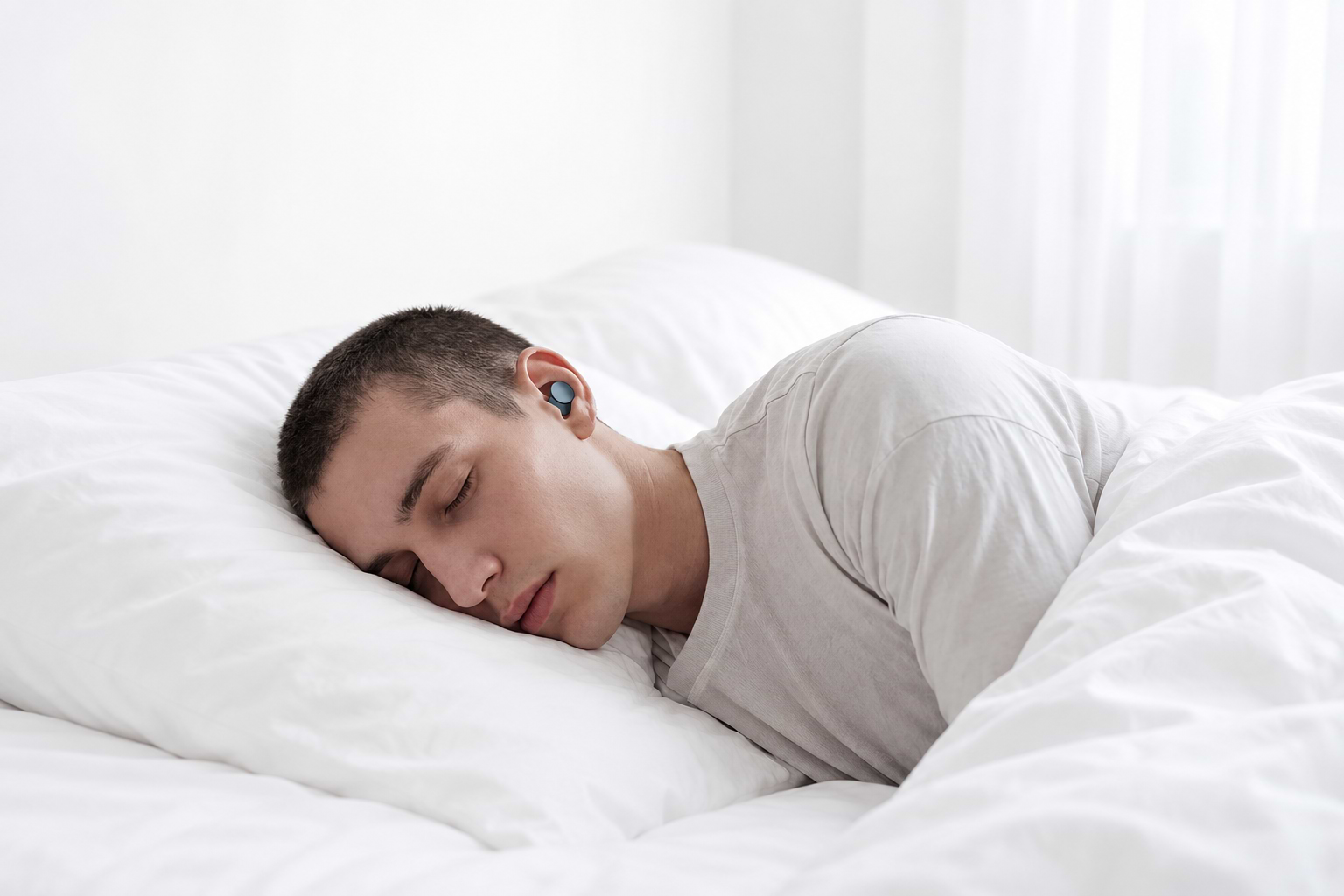
For side sleepers, a low-profile shape can reduce contact with the pillow and help prevent uncomfortable pressure. A secure design can also make it easier for the earplug to maintain its position throughout the night.
A good fit needs to last longer than the first 30 seconds.
Condition and care
Reusable earplugs need regular cleaning and occasional replacement. Residue can affect the fit, while damaged or worn tips may no longer create the same seal.
Follow the manufacturer’s care instructions, dry the earplugs completely after washing, and inspect them for changes in shape, flexibility, or condition.
Comfort, hygiene, and performance are more connected than they may appear.
How many decibels should sleep earplugs block?
There is no single NRR or SNR rating that every sleeper should choose. The right level of noise reduction depends on your environment, sound sensitivity, and personal preferences.
It also depends on whether you need to remain aware of an alarm, a child, a doorbell, or another important sound.
| Sleep situation | What to prioritize |
|---|---|
| Snoring partner | A secure seal, stable fit, and all-night comfort |
| Road traffic | Consistent attenuation and a fit that stays in place |
| Neighbors or voices | A good seal and effective reduction across varied frequencies |
| Travel | Comfortable noise reduction, portability, and easy cleaning |
| Side sleeping | A low-profile shape with minimal pillow pressure |
| Sound sensitivity | A balance between useful reduction and awareness of essential sounds |
The highest available rating is not automatically the best choice. For sleep, the earplugs must also remain comfortable enough to wear for several hours.
Earplugs for sleeping with snoring
Snoring is an irregular sound. Its volume, pitch, and rhythm can change throughout the night, which makes it difficult for a single rating to predict exactly how much you will hear.
Earplugs can reduce the prominence of snoring and make it less disruptive, but they are unlikely to remove it completely, especially when the source is lying beside you.
When choosing earplugs for sleeping with snoring, look beyond the headline rating and consider:
- Whether the earplugs create a complete seal
- Whether they remain secure as you move
- Whether the material stays comfortable over several hours
- Whether multiple ear tip sizes are available
- Whether the shape works with your sleeping position
The goal does not have to be absolute silence. Making the sound less intrusive may be enough to help you stop following every snore and return your attention to sleep.
Earplugs for traffic and background noise
Traffic, air-conditioning, appliances, and other steady background sounds may become easier to ignore when their overall level is reduced.
However, not every background noise behaves in the same way. Low engine sounds, higher-pitched voices, footsteps, and sudden impacts occupy different frequencies. An overall NRR or SNR cannot show exactly how much each one will be softened.
Think about the noise that affects you most. You are not simply choosing a number. You are choosing what you want to hear less of.
Earplugs for travel
Travel combines several types of sound at once. A plane or train journey can include engine noise, conversations, announcements, doors, and movement. A hotel may introduce traffic, elevators, air-conditioning, or unfamiliar activity in the hallway.
Travel earplugs should reduce enough noise to make the environment less disruptive while remaining comfortable and practical to carry. Reusable designs can be especially useful when they are washable and come with a protective case.
You may also want to remain aware of announcements and alarms. Test the earplugs in a safe setting before relying on them in situations where hearing important information matters.

Is a higher NRR or SNR always better for sleeping?
No. A higher rating indicates greater tested attenuation under the relevant system, but it does not automatically make the earplugs more suitable for sleep.
Nighttime comfort depends on several factors that the rating cannot measure:
- Pressure inside the ear
- Stability when changing position
- Comfort against the pillow
- Ease of insertion and removal
- Material and flexibility
- Available ear tip sizes
- Washability and care
- Awareness of essential sounds
Choosing sleep earplugs is therefore a balance between noise reduction and wearability. A highly rated pair that hurts, moves, or spends the night on your bedside table offers no practical advantage.
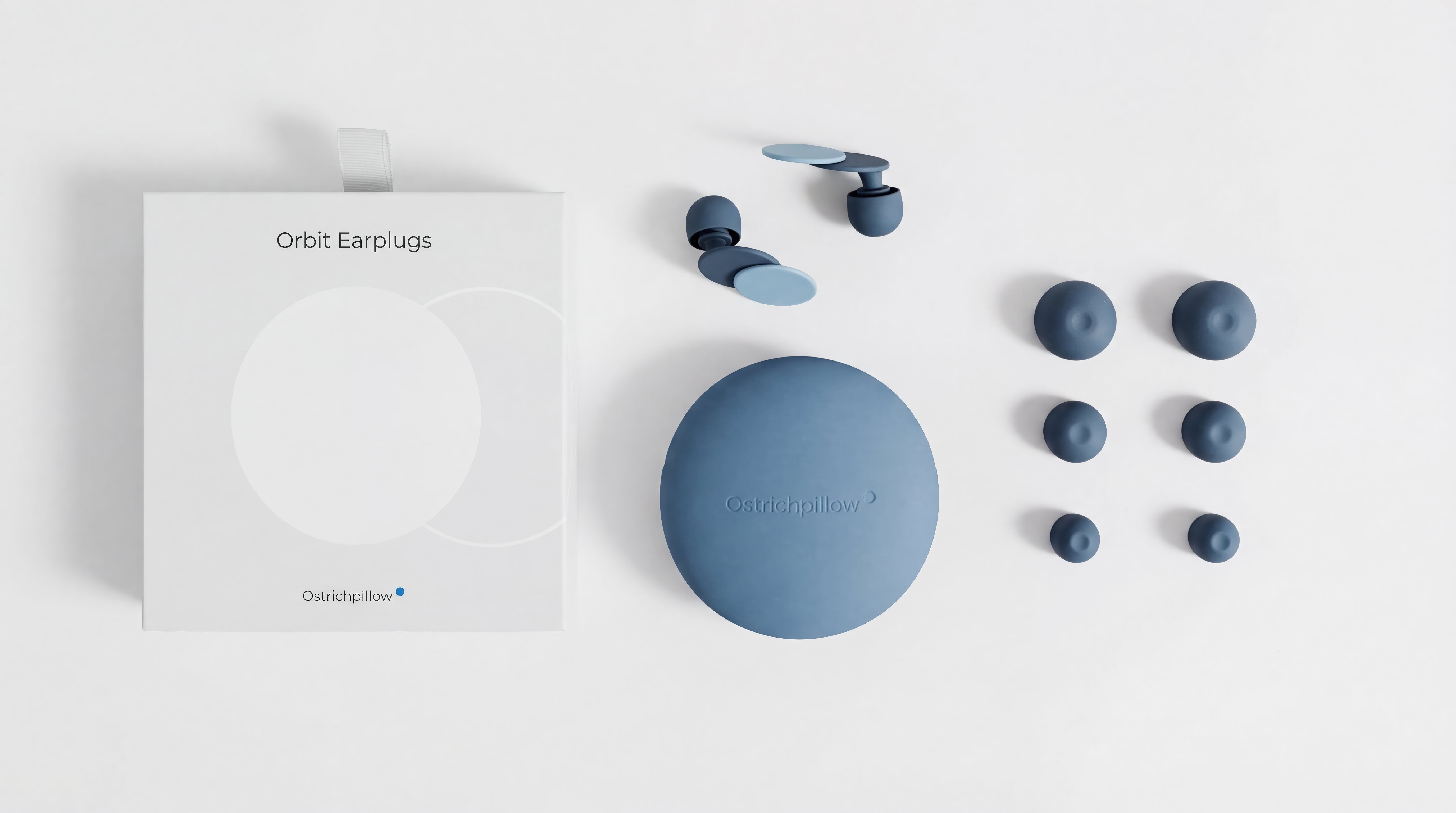
How to interpret the Orbit Earplugs ratings
Orbit Earplugs have a tested noise reduction rating of:
- 19 dB NRR
- 26 dB SNR
These two figures describe the same earplugs under different rating systems. They do not mean that Orbit sometimes reduces 19 dB and sometimes reduces 26 dB. They also do not mean the European version offers more noise reduction than the US version.
The ratings provide market-appropriate reference points for comparing Orbit with other earplugs evaluated under the same system.
But Orbit was not designed around the number alone. It also includes:
- Four interchangeable silicone tip sizes, from XS to L
- A swivel-lock system designed for a secure fit
- A low-profile shape suited to side sleeping
- Soft, flexible silicone
- Washable and reusable components
- A protective carrying case
The ratings describe tested attenuation. The design helps make that attenuation comfortable enough to use for sleep, travel, focus, and everyday pauses.
What else should you consider when choosing sleep earplugs?
NRR and SNR can help narrow your options. The final decision should also account for how the earplugs fit into your nights.
Secure fit
Earplugs should remain stable without feeling painfully tight. A loose fit can allow more sound through and make the earplugs more likely to fall out. Excessive pressure can make them difficult to wear for long periods.
Multiple ear tip sizes
Several sizes give you a better chance of creating a comfortable seal in each ear. Do not assume the tip already attached is automatically right for you, or that both ears need the same size.
Compare the available options for comfort, stability, pressure, and perceived noise reduction.
Side-sleeping comfort
If you sleep on your side, the pillow places pressure around the outer ear. An earplug that protrudes too far can press inward, shift position, or create a sore point.
A low-profile design sits closer to the ear and is less likely to interfere with your preferred position. Sleep should not require negotiating with your earplugs every time you turn over.
Material
Soft, flexible materials can make extended wear more comfortable. Silicone earplugs also offer the advantage of being washable and reusable when cared for correctly.
Check which parts can be washed, how they should be dried, and when the manufacturer recommends replacing them.
The noise you want to reduce
Two earplugs with similar ratings may not feel identical against every sound. Differences in fit, shape, materials, and frequency-specific attenuation can influence the experience.
Start with the problem you want to solve, whether that is close-range snoring, distant traffic, voices, or general travel noise. The best choice is the one that works in your environment, not only on its packaging.
How to check whether your sleep earplugs fit
Test each ear separately and follow the manufacturer’s insertion instructions.
- Wash and dry your hands.
- Insert the earplug with your chosen tip size.
- Notice whether ambient sound becomes clearly softer.
- Move your jaw and turn your head.
- Check that the earplug remains stable and comfortable.
- Lie in your normal sleeping position.
- Notice any movement or pressure against the pillow.
- Repeat the process with another tip size if needed.
- Test any alarm or essential alert you need to hear.
A secure fit should reduce sound without causing pain. If the earplug feels loose, creates excessive pressure, or moves when you lie down, another size or insertion angle may work better.
Finding the right fit may take a few attempts. That time is not wasted. Comfort is part of performance.
Frequently asked questions
Is SNR higher than NRR?
The SNR shown for a product is often numerically higher than its NRR because the two systems use different testing and calculation methods.
That does not mean the SNR version provides more noise reduction. Compare NRR with NRR and SNR with SNR.
Is 19 dB NRR enough for sleeping?
A 19 dB NRR can provide useful noise reduction in many everyday sleep environments. Whether it is enough for you will depend on the noise, its proximity, your sound sensitivity, and the fit of the earplugs.
For sleeping, comfort and stability also matter. A higher rating is not helpful if the earplugs cannot be worn consistently.
Will 26 dB SNR earplugs completely block snoring?
No earplugs should be expected to remove every sound completely.
A 26 dB SNR describes tested attenuation under the SNR system. The amount of snoring you perceive will also depend on its volume and frequencies, your distance from the sleeper, and whether the earplugs maintain a complete seal.
Earplugs can soften snoring and make it less disruptive without creating total silence.
Can you still hear an alarm while wearing earplugs?
You may still hear a loud or nearby alarm, but this cannot be guaranteed for every person, alarm, volume setting, and earplug fit.
Test your alarm while wearing the earplugs before relying on it. If waking at a specific time is essential, consider combining an audible alarm with a vibrating or visual alert.
Do two earplugs with the same rating perform identically?
Not necessarily. They may differ in shape, material, frequency-specific attenuation, ear tip options, stability, and comfort.
Two products with the same NRR or SNR can therefore create different real-world experiences for the same person.
The rating is a starting point
NRR and SNR are useful tools for comparing the tested noise reduction of earplugs. NRR is primarily used in the United States, while SNR is widely used in Europe. Because the systems rely on different methods, their numbers cannot be compared or converted directly.
For sleep, the label only tells part of the story. The earplugs also need to fit, seal, stay in place, and feel comfortable against the pillow. The type of noise matters too.
Orbit Earplugs combine 19 dB NRR and 26 dB SNR tested noise reduction with four tip sizes, flexible silicone, a low-profile shape, and a secure swivel-lock fit.
Because the best noise reduction is the kind you can actually sleep in.
Explore more tools designed for nighttime comfort in our Sleep Collection, or discover the differences between silicone and foam earplugs for sleep.